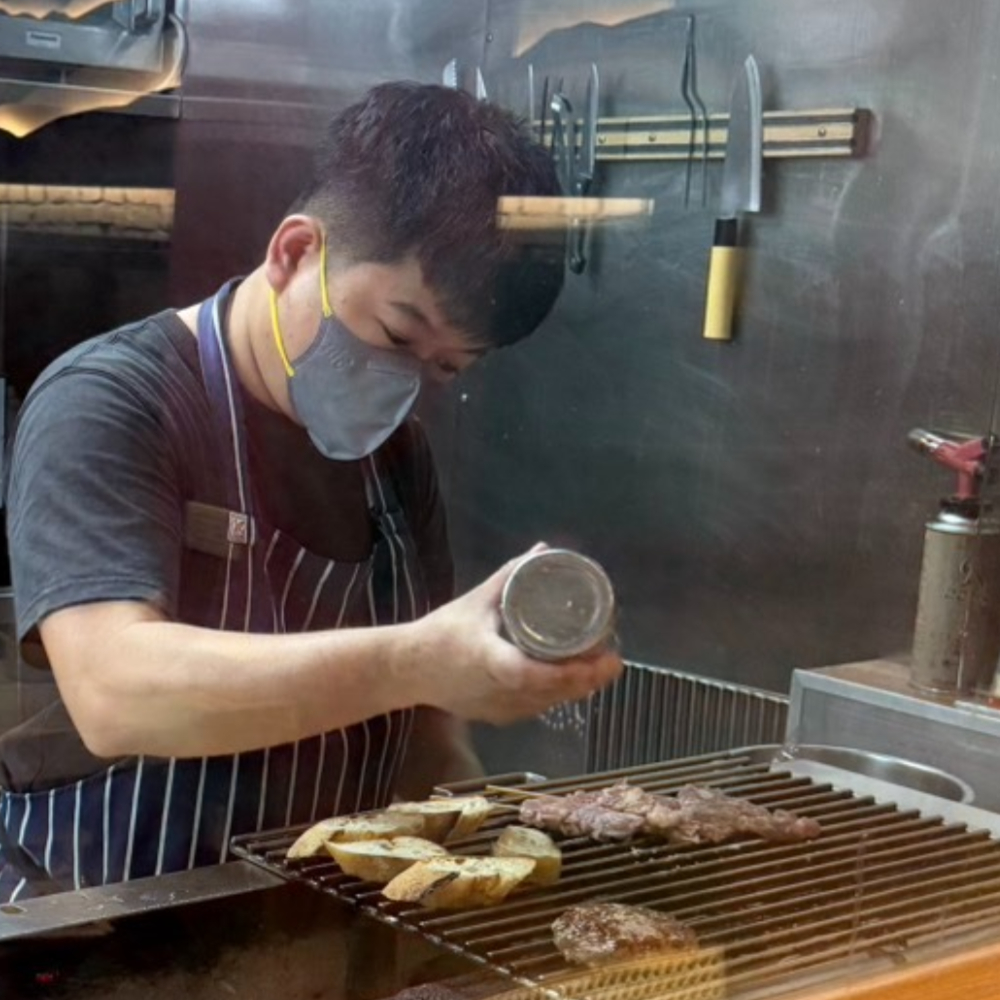



What Happens After Long-term Exposure to BBQ Fumes?
3 Key Protection Strategies for Culinary Professionals
Many BBQ restaurant owners and staff often joke about "inhaling delicious aromas all day." However, behind that enticing scent lies a high concentration of occupational exposure risk. If you frequently experience a hoarse voice, dry cough, or excessive phlegm after closing shop, it’s not just simple fatigue—it’s a distress signal from your lungs.
Why are BBQ Fumes Considered a "Silent Killer"?
The smoke generated from grilling is vastly different from ordinary water vapor; it contains high levels of carcinogens, including Fine Particulate Matter (PM2.5) and Polycyclic Aromatic Hydrocarbons (PAHs).
-
Shocking Inhalation Levels: Research indicates that working a full day in a poorly ventilated BBQ environment without protection can result in inhaling harmful substances equivalent to smoking several packs of cigarettes.
-
The Cumulative Effect: Customers only stay for 1–2 hours, but professionals are exposed for over 8 hours daily. This long-term "occupational exposure" is a primary cause of chronic respiratory inflammation.
Debunking the Myth: Is a Range Hood Enough?
Many establishments have exhaust systems, yet chefs still see "red flags" on their health check reports. The issue lies in the "airflow path":
-
Fumes Pass Through the Breath Zone: Most exhaust fans are installed overhead. Before the smoke is sucked away, it passes directly through the chef’s breathing zone.
-
Fine Dust Diffusion: While range hoods capture large plumes of smoke, microscopic oil particles diffuse throughout the kitchen with rising heat, making them nearly impossible to avoid.
3 Essential Actions to Protect Your Respiratory Health
1. Enhance Environmental Ventilation
Exhaust systems should be positioned as close to the cooking surface as possible (low-level extraction). Ensure the hood completely covers the ignition point to minimize the distance fumes travel past the nose and mouth.
2. Upgrade Personal Protection (DC Mask Professional Care)
Standard medical masks cannot effectively filter oil-based fumes. For catering environments, you should choose professional masks equipped with oil-resistant physical membrane technology. DC Masks (防油煙口罩) are specifically designed to combat fine particulate matter, effectively blocking both oily and non-oily particles. Their high breathability ensures you can breathe comfortably even in a hot kitchen, preventing the urge to remove the mask due to discomfort.
3. Regular Low-Dose CT Scans (LDCT)
We recommend that catering professionals undergo a Low-Dose Computed Tomography (LDCT) scan annually. This is currently the most effective tool for detecting early-stage lung lesions and is crucial for those with long-term exposure to cooking oil fumes.
Conclusion: Equipment Protects the Environment; DC Mask Protects You
Culinary professionals are the creators of great food, but it should not come at the cost of their health. While range hoods optimize the workspace environment, a professional oil-fume mask is your final line of defense for your respiratory system.
#DCMask #BBQFumes #OilFumeMask #OccupationalSafety #CateringEntrepreneurship #PM25Protection #LungHealth #LDCT